



The Short Answer: Can You Upgrade Your Furnace Blower Motor?
Are you noticing weak airflow or cold spots in your home as you turn your system on for the fall heating-startup? At Henderson Heating & Cooling, it is a common frustration we hear from Lebanon homeowners this time of year. When the air coming from your vents feels like a weak breeze instead of a strong, comforting current of heat, the most intuitive solution seems simple: just install a more powerful fan. If you find yourself asking, “can I put a bigger blower motor in my furnace?” the short answer is no—you should not upsize your blower motor without also modifying your home’s ductwork.
For professional help getting your system ready for winter, learn more about our furnace repair solutions.
In our years of servicing local homes, we’ve seen firsthand that airflow in a residential heating system is not just a matter of motor horsepower. It is a complex, system-wide equation that relies on a delicate balance between the mechanical force of the furnace and the physical space inside your air ducts. When you attempt to force more air through a space that was not designed to handle it, you do not get better airflow. Instead, you create a bottleneck that can severely damage your HVAC equipment.
Why a Larger Motor Isn’t a Quick Fix
Every furnace is engineered to work with a specific size of blower motor, which is carefully matched to the heat exchanger and the anticipated size of the home’s ductwork. A pattern we see often is homeowners forcing a larger motor into an existing system to push more air through undersized ducts, which creates immediate mechanical issues.
The primary complications include:
- Overworking the equipment: A larger motor pushing against a narrow duct system has to work significantly harder than it was designed to.
- Premature burnout: Because the motor is straining against high resistance, it draws more electrical current, runs hotter, and ultimately burns out much faster than a properly sized motor.
- Furnace overheating: If the air cannot escape the ductwork fast enough, the heat generated by the furnace stays trapped inside the unit, leading to dangerous overheating conditions.
Rather than solving your cold spots, dropping a bigger motor into the cabinet usually guarantees a more expensive breakdown later in the season.
Understanding the Physics: Airflow and Static Pressure
To understand why upsizing fails, you have to look at the physics of airflow. The most critical measurement in any HVAC system is static pressure. You can think of static pressure like blood pressure for your heating system—it is the measurement of resistance to airflow inside your ducts.
Imagine trying to blow as hard as you can through a standard drinking straw. No matter how strong your lungs are, only a small amount of air can pass through the straw at one time. If you blow harder, you do not move significantly more air; you just build up pressure in your cheeks and exhaust yourself. Your furnace blower motor faces the exact same physical limitation when trying to push air through restrictive ductwork. When our team evaluates a home for a furnace blower motor upgrade, we rely on a deep understanding of these exact physical constraints.
Standard residential HVAC duct systems are typically designed to operate at a total external static pressure of 0.5 inches of water column (WC). This is the “sweet spot” where the blower motor can move the right amount of air without straining. When you attempt to force a higher volume of air—measured in Cubic Feet per Minute (CFM)—through the same ducts, the friction increases exponentially. This friction causes the static pressure to spike well beyond 0.5 inches WC, forcing the blower motor to draw excessive amperage and overheat.
Motor Horsepower vs. Ductwork Volumetric Capacity
A common misconception we encounter is confusing mechanical power with volumetric capacity. Motor horsepower is simply the rotational force the motor can generate. Volumetric capacity is the actual physical volume of air that your ductwork can carry at any given moment.
The ductwork is almost always the limiting factor, not the motor itself. If your supply and return ducts are only sized to carry 1,200 CFM of air, installing a motor capable of pushing 1,600 CFM will not magically expand the sheet metal inside your walls. The extra 400 CFM of air simply crashes into the walls of the ductwork, creating turbulence, noise, and severe back-pressure that damages the system.
The Domino Effect of Oversized Motors in Undersized Ducts
When a homeowner or an inexperienced handyman attempts a heater fan motor replacement using an oversized part, it triggers a dangerous domino effect inside the heating system. The mechanical failures that follow are predictable, expensive, and potentially unsafe.
The Problem: Restricted Airflow Across the Heat Exchanger
Your furnace relies on a steady, uninhibited flow of air to extract heat from the heat exchanger and carry it into your home. When an oversized motor battles high static pressure, the actual volume of air moving across the heat exchanger drops, even though the motor is working harder.
The Cause: Internal Temperature Spikes
Because the heat is not being carried away efficiently, the internal temperatures inside the furnace cabinet begin to spike rapidly. The heat exchanger absorbs more thermal energy than it can shed, pushing the metal beyond its safe operational limits.
The Consequence: High-Limit Switch Trips
Every modern furnace is equipped with a high-limit safety switch. This sensor monitors the temperature inside the cabinet. If the heat exchanger gets too hot, the limit switch trips and immediately shuts down the burners to prevent a fire or a cracked heat exchanger. When an oversized motor is fighting undersized ducts, the furnace will often “short cycle”—turning on, overheating, shutting down, and repeating the process.
In cold winter climates like Lebanon, MO, our technicians frequently see how a furnace repeatedly shutting down on high-limit safety trips poses a significant risk. If your system locks out during freezing temperatures, you lose home heating entirely, which quickly impacts your comfort and can lead to frozen, burst pipes.

How Professionals Diagnose and Measure Airflow Issues
Because airflow is invisible, guessing at the cause of cold spots is a recipe for wasted time and damaged equipment. At Henderson Heating & Cooling, our true HVAC professionals rely on expert understanding of HVAC physics and static pressure, ensuring safe, effective repairs and upgrades rather than quick fixes that could damage the system.
When our team assesses HVAC systems for poor airflow, we follow a precise diagnostic process to find the actual bottleneck:
- Visual Inspection: We inspect the visible ductwork, the air filter, and the blower cabinet for obvious blockages or extreme dirt buildup.
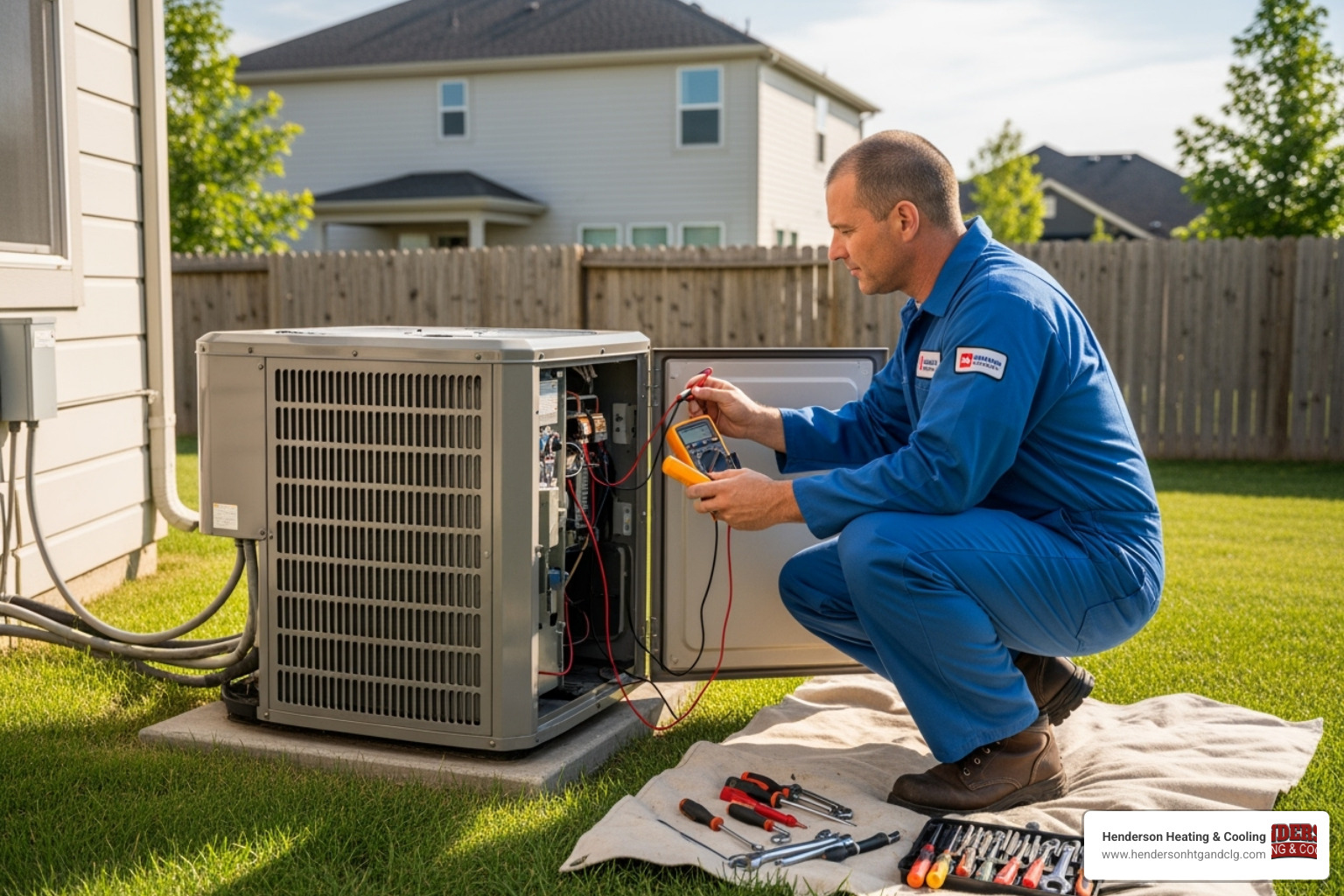
- Static Pressure Testing: Using a specialized digital tool called a manometer, we measure the exact air pressure in the supply plenum and the return drop. This is the most crucial step.
- Comparing Measurements: We compare the total external static pressure against the manufacturer’s data plate on the furnace (typically looking for that 0.5 inches WC target).
- Isolating the Restriction: If the pressure is too high, we take further readings to determine if the restriction is on the return side (not enough air getting in) or the supply side (air cannot get out).
Identifying Hidden Ductwork Restrictions
During the fall heating-startup, dormant airflow restrictions often become apparent for the first time in months. A homeowner might assume their blower motor is failing, when in reality, our tests show the system is choking on a physical blockage.
Common hidden culprits of high static pressure include highly restrictive, high-MERV air filters that block too much air. Another frequent issue is dirty evaporator coils; if the indoor AC coil sitting above the furnace is caked in dust from the summer, air cannot flow through it to heat the home. Even simple things, like closed dampers or crushed flexible ductwork in the attic, will mimic a failing motor perfectly. A proper manometer test reveals these issues instantly.
ECM vs. PSC Motors: Upgrading Efficiency Instead of Size
If your current blower motor is genuinely failing, our team typically recommends that you do not need a larger motor—but you might benefit from a more efficient one. Provided your ductwork is properly sized and in good condition, upgrading the motor type can provide better comfort and lower energy consumption. (As a bonus, upgrading to high-efficiency equipment may even qualify you for generic federal tax credits or utility incentive programs; we always advise checking with your utility provider or tax professional for current availability.)
Historically, most furnaces used PSC (Permanent Split Capacitor) motors. Today, the industry standard we install is the ECM (Electronically Commutated Motor).
| Feature | Standard PSC Motor | Modern ECM Upgrade |
|---|---|---|
| Energy Efficiency | Consumes more electricity, runs at a fixed speed. | Highly efficient, uses significantly less electricity. |
| Airflow Control | On or off. Delivers a sudden blast of air. | Variable speed. Ramps up slowly for even heating. |
| Response to Static Pressure | Airflow drops off sharply if ducts are restricted. | Automatically adjusts torque to maintain steady CFM. |
An ECM can improve energy efficiency and provide more consistent airflow without necessarily increasing the raw CFM beyond the ductwork’s capacity. However, it is vital to note that ECMs are highly sensitive to high static pressure. If you install an ECM in a home with undersized ducts, the motor will constantly run at maximum torque trying to overcome the resistance, leading to a very quick, very expensive motor failure. Even an ECM upgrade requires a professional assessment of current static pressure to ensure compatibility.
Resolving System-Wide Airflow Problems Effectively
If a professional static pressure test reveals that your home genuinely needs more airflow to remain comfortable, the solution happens outside the furnace cabinet. In our experience working in Lebanon, resolving the issue correctly requires addressing the physical pathways the air travels through.
The most common and effective solution our team implements is modifying or expanding the ductwork. Often, the supply ducts (blowing air out) are adequately sized, but the return ducts (pulling air in) are severely undersized. A furnace can only blow out as much air as it can pull in. Adding additional return air drops or widening the existing return plenum can dramatically lower static pressure, allowing the existing blower motor to move air freely and quietly.
In cases where the entire duct system is fundamentally too small for the size of the house, it might be necessary to evaluate the entire system’s sizing rather than just isolated components. If a previous owner installed a massive furnace on tiny ductwork, a full furnace replacement with a properly sized, smaller unit might actually provide better, more even heating than the oversized unit ever could.
Frequently Asked Questions About Furnace Airflow and Motors
What happens if I put a bigger blower motor in my furnace?
Putting a bigger blower motor in your furnace forces a high volume of air into ducts that cannot handle it, causing a massive spike in static pressure. This resistance makes the new motor overwork, draw excessive electrical current, and burn out prematurely. Additionally, the restricted airflow traps heat inside the furnace, leading to dangerous overheating and frequent system shutdowns.
How do I increase airflow from my furnace safely?
The safest way to increase airflow is to reduce the static pressure in your duct system. Start by replacing restrictive air filters with standard pleated filters, ensuring all room vents and dampers are fully open, and having your evaporator coil professionally cleaned. If airflow is still weak, our team can measure your static pressure and add additional return air ducts to let the system breathe.
Can you upgrade a furnace blower motor to a more efficient model?
Yes, we often recommend upgrading an older PSC motor to a highly efficient ECM (Electronically Commutated Motor), provided your existing ductwork is sized correctly. ECMs use less electricity and provide smoother, quieter airflow. However, because ECMs are sensitive to high static pressure, a professional must test your ducts first to ensure the new motor won’t burn itself out fighting restriction.
What size blower motor do I need for my furnace?
You need the exact size blower motor that the furnace manufacturer specifies for your specific model and heat exchanger capacity. Blower motors are sized based on the engineered limits of the furnace cabinet and the expected static pressure of standard ductwork. Never deviate from the manufacturer’s specified horsepower and RPM ratings when replacing a motor.
Why does my furnace high-limit switch keep tripping?
The high-limit switch trips when the internal temperature of the furnace heat exchanger exceeds safe operating limits. In our service calls, this is almost always caused by poor airflow failing to carry the heat away from the burners. Common culprits include clogged air filters, blocked vents, dirty blower wheels, or forcing an oversized motor to push against undersized ductwork.
Can a restrictive air filter cause my blower motor to overheat?
Yes, a highly restrictive air filter acts like a wall, starving the blower motor of the return air it needs to circulate. When the motor cannot pull enough air, it strains against the resulting high static pressure, runs hotter than normal, and draws higher amperage. Over time, this constant strain will cause the motor to overheat and fail prematurely.
Get to the Root of Your Furnace Airflow Problems
True indoor comfort during the fall heating-startup comes from a balanced, well-designed system, not just a bigger motor. Forcing a massive fan into restrictive ductwork ignores the physics of static pressure and only leads to overheating, high-limit trips, and expensive premature failures. If your home has stubborn cold spots or weak airflow, the right next step is diagnosing the actual bottleneck. Our team at Henderson Heating & Cooling encourages you to seek a professional static pressure test to find the real cause of your airflow issues. Schedule a professional airflow diagnostic today to ensure your system operates safely, efficiently, and effectively all winter long.